Remember the film "Network"? If you don't, here's the Cliff's notes: Long-time network news anchor Howard Beale suffers a decline in his ratings and some personal upheaval, is given notice, and then has a breakdown on air. In which he promises to blow his brains out on network TV the following week.
This, of course, provides a ratings spike. Beale, now completely mad, takes the bully pulpit with some help from unscrupulous TV execs and turns the news into a nightly rant against everything from Arabs to youth culture to, eventually, rampant corporatism. Fashioned as the "mad prophet of the airwaves," Beale draws a cult of personality around him and becomes the center of a populist movement - one that implodes when a rant touches too close to home for his corporate overlords. Who then have him shot on live TV because he's become a liability.
The point is, Beale's rallying cry was "I'm mad as hell, and I'm not gonna take it anymore!" Which really doesn't mean anything.
Until now.
Buffalo Businessman Enters Governor's Race
Conservative Developer Joins Race for Governor
"Network" just got significantly better (and it was already great). Both the mainstream media and bloggers from around the country have tried to distill the essence of the Tea Party movement, to define it and put a label on it. But the fact is, Chayefsky had already done it for us 35 years ago.
The Tea Party is an angry, drunk, suicidal, insane old white guy. Who's mad about something, and whose unfocused rage is all that holds the movement together. And will be tossed to the side by corporate America as soon as he moves from "asset" to "liability."
Sounds about right.
Tuesday, April 6, 2010

Thursday, March 25, 2010
It's better to ask forgiveness than permission
That lesson, learned by four year olds world wide, seems to finally have sunk in to the democrats in congress.
U.S. Senate passes reconciliation bill and sends it back to the House
About time. It goes without saying that I think the bill itself needs some fixing, but a big part of politics is just pushing stuff forward. Bush and the republicans won elections over the first half of the last decade simply by being "The Decider(s)."
I can't believe it took the Dems almost a year and a half to figure out the same strategy.
U.S. Senate passes reconciliation bill and sends it back to the House
About time. It goes without saying that I think the bill itself needs some fixing, but a big part of politics is just pushing stuff forward. Bush and the republicans won elections over the first half of the last decade simply by being "The Decider(s)."
I can't believe it took the Dems almost a year and a half to figure out the same strategy.
Tuesday, March 23, 2010
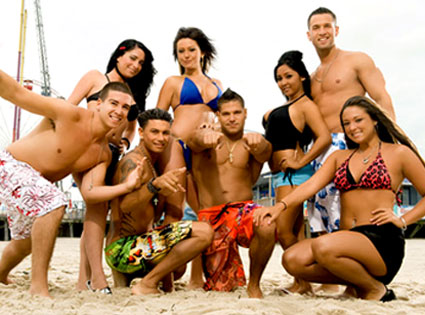
Snooki is pissed
The President is signing the new Health Care Bill 4872 today. Some rejoice, some gnash their teeth, some call civil rights hero John Lewis a ni**er.
In other words, politics as usual.
If you don't know what health care reform means for you, here's a helpful article called "So what does health care reform mean for you?" Trust me, it's on-topic.
Or as a friend of mine put it:
This all seems good to me. But some folks are still really pissed off.
And I think I found out why. The following is from a Reuters article on the bill's contents:
It's the Jersey Shore provision! Does no one care about their needs?

In other words, politics as usual.
If you don't know what health care reform means for you, here's a helpful article called "So what does health care reform mean for you?" Trust me, it's on-topic.
Or as a friend of mine put it:
Let's see, seniors get drugs when they need them, someone can't be dropped when they, um, get sick, job changers can't be refused because they used to be sick, oh, and colleges can lend money directly to students avoiding banker's middle man expenses.
This all seems good to me. But some folks are still really pissed off.
And I think I found out why. The following is from a Reuters article on the bill's contents:
WITHIN THE FIRST YEAR OF ENACTMENT
*Insurance companies will be barred from dropping people from coverage when they get sick. Lifetime coverage limits will be eliminated and annual limits are to be restricted.
*Insurers will be barred from excluding children for coverage because of pre-existing conditions.
*Young adults will be able to stay on their parents' health plans until the age of 26. Many health plans currently drop dependents from coverage when they turn 19 or finish college.
*Uninsured adults with a pre-existing conditions will be able to obtain health coverage through a new program that will expire once new insurance exchanges begin operating in 2014.
*A temporary reinsurance program is created to help companies maintain health coverage for early retirees between the ages of 55 and 64. This also expires in 2014.
*Medicare drug beneficiaries who fall into the "doughnut hole" coverage gap will get a $250 rebate. The bill eventually closes that gap which currently begins after $2,700 is spent on drugs. Coverage starts again after $6,154 is spent.
*A tax credit becomes available for some small businesses to help provide coverage for workers.
*A 10 percent tax on indoor tanning services that use ultraviolet lamps goes into effect on July 1.
It's the Jersey Shore provision! Does no one care about their needs?
Friday, March 12, 2010
Some bullshit happened somewhere
The Onion says it better than I could:
Breaking News: Some Bullshit Happening Somewhere
Just want to point out that this is how our national debate is formed. Beware the 24/7 news cycle.
Breaking News: Some Bullshit Happening Somewhere
Just want to point out that this is how our national debate is formed. Beware the 24/7 news cycle.
Wednesday, March 10, 2010
Of health care, credit bans and Boba Fett
Part of a modern existence is that you're obliged to come to terms with the interconnectedness of pretty much everything. That iPhone you just bought generates profits not only for Apple and AT&T, but for the guy in the Village who created a video game app that sells for 99 cents. And he spends his money on coffee at the corner store, and that guy lives out in Brooklyn, and spends $80 a month on a MetroCard, etc etc etc.
With that in mind, I've been processing a few seemingly disparate pieces of news over the past few days. First (not chronologically, but still first) is this dollop from the White House:
Obama: 'Bounty Hunters' Will Help Fight Health Care Fraud With Computer Audits
Ok, so this is politically-neutral, already vetted in the three biggest states in the country, and stands to gain us, the taxpayers, some cash, while improving Medicare. As long as it doesn't turn into "paying would-be fraud hunters for services promised" rather than "services rendered," this is aight with me.
Plus, you know, "Bounty Hunters" gives me a chance to post this pic:

But it also begs the question: Why not use this same system to expose securities fraud? Why not empower guys like Harry Markopolos instead of marginalizing them?
In case you missed it, Markopolos has a new book out and made an appearance on The Daily Show the other day. He's none too happy with the way things went, the way things are going, and the way he thinks things are going to continue to go.
Markopolos already did basically what Obama is having the MediCare bounty hunters do, except he did it pro bono. Which is awesome, and you'd think would make him a pretty great choice as SEC chairman. But it turns out it's made him persona non grata with either party, as the entire corporate/government complex tries to make believe the Madoff scandal was an isolated incident.
As the whole Greece thing shows, it's not. And while Europe is finally taking some regulatory action - Europe moves to ban credit default swaps - it's clear that the Obama administration and the democrats in general don't have the stones to follow that lead.
But they've got to do something. As Markopolos said in his interview with Stewart, lawyers and pastry chefs and dilettantes don't have the expertise to catch the money folks. And the government doesn't have the intestinal fortitude.
So then it comes down to a process of the market: Make it pay for the money folks to turn on each other. Don't rely on acts of conscience. Rely on greed.
With that in mind, I've been processing a few seemingly disparate pieces of news over the past few days. First (not chronologically, but still first) is this dollop from the White House:
Obama: 'Bounty Hunters' Will Help Fight Health Care Fraud With Computer Audits
Obama's anti-fraud announcement was aimed directly at the political middle.
Waste and fraud are pervasive problems for Medicare and Medicaid, the giant government health insurance programs for seniors and low-income people. Improper payments – in the wrong amounts, to the wrong person or for the wrong reason – totaled an estimated $54 billion in 2009. They range from simple errors such as duplicate billing to elaborate schemes operated by fraudsters peddling everything from wheelchairs to hospice care.
The bounty hunters in this case would be private auditors armed with sophisticated computer programs to scan Medicare and Medicaid billing data for patterns of bogus claims. The auditors would get to keep part of any funds they recover for the government. The White House said a pilot program run by Medicare in California, New York and Texas recouped $900 million for taxpayers from 2005-2008.
Ok, so this is politically-neutral, already vetted in the three biggest states in the country, and stands to gain us, the taxpayers, some cash, while improving Medicare. As long as it doesn't turn into "paying would-be fraud hunters for services promised" rather than "services rendered," this is aight with me.
Plus, you know, "Bounty Hunters" gives me a chance to post this pic:

But it also begs the question: Why not use this same system to expose securities fraud? Why not empower guys like Harry Markopolos instead of marginalizing them?
In case you missed it, Markopolos has a new book out and made an appearance on The Daily Show the other day. He's none too happy with the way things went, the way things are going, and the way he thinks things are going to continue to go.
| The Daily Show With Jon Stewart | Mon - Thurs 11p / 10c | |||
| Harry Markopolos | ||||
| ||||
Markopolos already did basically what Obama is having the MediCare bounty hunters do, except he did it pro bono. Which is awesome, and you'd think would make him a pretty great choice as SEC chairman. But it turns out it's made him persona non grata with either party, as the entire corporate/government complex tries to make believe the Madoff scandal was an isolated incident.
As the whole Greece thing shows, it's not. And while Europe is finally taking some regulatory action - Europe moves to ban credit default swaps - it's clear that the Obama administration and the democrats in general don't have the stones to follow that lead.
But they've got to do something. As Markopolos said in his interview with Stewart, lawyers and pastry chefs and dilettantes don't have the expertise to catch the money folks. And the government doesn't have the intestinal fortitude.
So then it comes down to a process of the market: Make it pay for the money folks to turn on each other. Don't rely on acts of conscience. Rely on greed.
Thursday, March 4, 2010
A dangerous precedent
Sliding under the radar, what with all the health care news, jobs news, and crazy old Kentucky senator news, was this little gem:
Bush administration lawyers John Yoo, Jay Bybee cleared on torture rap
If your memory is a bit hazy on the specifics, let me help you recall them: Yoo was an associate in the Bush administration's office of legal council and Bybee was his superior. Yoo is the twisted pseudo-fascist whose extreme views of the limits of executive power gave Bush and company the legal pretense they needed to perpetrate torture. Bybee is the gust of wind that merely nodded and passed the buck.
I'm not really surprised that they both got off scot-free. They're lawyers, they know how to manipulate the law. And more importantly, the people prosecuting them know that law is based upon precedent, and that one day it could be their ass in the chair.
But it's disturbing nonetheless. I'm not a legal expert, but I know a lil' bit, and Yoo's broad view of executive power is, was, and hopefully will always be unconstitutional. It was his legal opinion that warrants weren't needed for wiretaps. It was his legal opinion that torture was acceptable because of the "stresses" of 9/11. It was his legal opinion that, in a time of military conflict, the president needn't answer to any of the other branches of government.
Not coincidently, here's some of Alberto Gonzalez's testimony from 2006:
You see, a war declaration would have made the president - and by extension, the DoJ - culpable to both the legislative and judicial branches.
Neither Yoo nor Bybee were found to have committed gross professional misconduct and disbarred. Instead, Deputy Associate Attorney General David Margolis said that they'd both shown "bad judgement," but said judgement wasn't actionable because it came from a set of sincerely held beliefs.
Let that sink in for a moment.
I'm pretty sure any six year old could see the legal loophole that makes for. Since the US is in a perpetual state of military conflict, the president, legally, can do whatever he wants. All he has to do is find a whack-job extremist, give him a desk at the DoJ, and ask for a manifesto.
It's not often I find myself on the same side of an issue as the Tea Party, but if they'd stop chanting at NY Times reporters for just a minute, I'm sure this ruling would send them to Defcon 5. Because, by legal precedent, "Crazy John over at the DoJ said it was kosher" is now enough to, say, suspend habeus corpus.
And the lawyers shall inherit the earth.
Bush administration lawyers John Yoo, Jay Bybee cleared on torture rap
If your memory is a bit hazy on the specifics, let me help you recall them: Yoo was an associate in the Bush administration's office of legal council and Bybee was his superior. Yoo is the twisted pseudo-fascist whose extreme views of the limits of executive power gave Bush and company the legal pretense they needed to perpetrate torture. Bybee is the gust of wind that merely nodded and passed the buck.
I'm not really surprised that they both got off scot-free. They're lawyers, they know how to manipulate the law. And more importantly, the people prosecuting them know that law is based upon precedent, and that one day it could be their ass in the chair.
But it's disturbing nonetheless. I'm not a legal expert, but I know a lil' bit, and Yoo's broad view of executive power is, was, and hopefully will always be unconstitutional. It was his legal opinion that warrants weren't needed for wiretaps. It was his legal opinion that torture was acceptable because of the "stresses" of 9/11. It was his legal opinion that, in a time of military conflict, the president needn't answer to any of the other branches of government.
Not coincidently, here's some of Alberto Gonzalez's testimony from 2006:
GONZALES: There was not a war declaration, either in connection with Al Qaida or in Iraq. It was an authorization to use military force. I only want to clarify that, because there are implications. Obviously, when you talk about a war declaration, you're possibly talking about affecting treaties, diplomatic relations. And so there is a distinction in law and in practice. And we're not talking about a war declaration. This is an authorization only to use military force.
You see, a war declaration would have made the president - and by extension, the DoJ - culpable to both the legislative and judicial branches.
Neither Yoo nor Bybee were found to have committed gross professional misconduct and disbarred. Instead, Deputy Associate Attorney General David Margolis said that they'd both shown "bad judgement," but said judgement wasn't actionable because it came from a set of sincerely held beliefs.
Let that sink in for a moment.
I'm pretty sure any six year old could see the legal loophole that makes for. Since the US is in a perpetual state of military conflict, the president, legally, can do whatever he wants. All he has to do is find a whack-job extremist, give him a desk at the DoJ, and ask for a manifesto.
It's not often I find myself on the same side of an issue as the Tea Party, but if they'd stop chanting at NY Times reporters for just a minute, I'm sure this ruling would send them to Defcon 5. Because, by legal precedent, "Crazy John over at the DoJ said it was kosher" is now enough to, say, suspend habeus corpus.
And the lawyers shall inherit the earth.
Thursday, February 25, 2010
Random Musings on Education/Policy
Why Do Failing Schools Fail?
Having taught for five years at high-poverty Brooklyn public schools -- schools where far less than half of the students could read and do math at grade level -- I've spent a lot of time pondering the dynamics of failing schools. I now teach at a much more successful school, where more than 90% of the students are meeting or exceeding standards (according to state tests). So I feel I'm in a good position to consider the question: what is the difference between a good school and a bad school? Why do students at some schools fail while others excel?
At my new school, the successful school, we ran out of funds to finish the floor of the new science lab. The parents conducted a phone and email campaign to the City Council, ultimately pressuring the local representative to take action. The new science lab is now completed, and it's beautiful.
At my new school, the PTA provides "gift certificates" to the teachers, which they can use to buy classroom supplies. During the book fair, teachers fill out wish list cards for their classrooms, and parents buy the desired books. When budget cuts forced the school to cut back after school activities, the PTA raised enough money through donations and bake sales to restore the full after school program. But it's not just a matter of money -- far from it. At this school, parents call me when they have a question about the homework. Every single family shows up at parent-teacher night (at my old school, I'd be surprised to get half). Parents volunteer in the school, helping out in the classrooms and monitoring the lunch room and playground.
At this school, there are no fights. Children never curse in front of (much less at) teachers. If a student is repeatedly late or absent, the attendance office calls his or her home. Persistent cases are automatically referred to the guidance counselor. My students do the work that they're assigned, and very rarely openly disobey a teacher.
Are the teachers at my new school more qualified than at the old schools? Are they more competent, or harder working? On balance, no. Is the budget higher? No -- quite the opposite; schools with poorer students get federal funds which this school doesn't qualify for. Is the curriculum different? Nope. The curriculum is actually identical.
The truth is that the main differences between the miserably failing schools and the shining successful one are the students, the parents and the school leadership. But mostly the first two.
I know this is an unpleasant truth for most people to face. It flies in the face of our liberal values and our egalitarian impulses. We want to believe that all children possess equal potential to succeed, regardless of race or socio-economic status. We want to believe that education is the door to opportunity and equality, open to all. We want to believe that unacceptable educational outcomes can be rectified through public policy reform. But I fear that the problem is far more complex than the public discourse (right now) will allow.
Education policy reform can not make parents more involved. It can not grant them the time, the knowledge nor the skills needed to be active in their child's school. Public policy can't provide parents sufficient education to assist their children with academic work. It can't make them read to their preschool-aged children, or teach them the alphabet, or count with them, or talk to them in standard English, or help grow their vocabularies. Public policy can't even compel parents to get their children to school on time and it certainly can't force them to discipline their kids when it's needed.
The sad truth is that a child's academic success is largely determined before he ever enters school, and his progress from there is affected by a thousand factors and influences which are well beyond the classroom teacher's or the school's control. Teaching poor children is simply harder than teaching their wealthier peers. Poverty presents real and unique educational challenges. Take any failing disaster of a public school in the worst area of the Bronx and switch it with a top-notch, elite private school on the Upper West Side. Swap their students, but leave everything else exactly the same -- same administration, same teachers, same facilities, same budget, same curriculum. You will soon see a drastic improvement in the shitty public school's performance, and a corresponding shameful drop in educational outcomes at the "better" school. In fact, it's quite possible that the good school will serve the poor students even worse than the bad school did, because the faculty will surely be unprepared for the issues and challenges specific to teaching a poor, urban population of students.
It's time we stopped pretending that the difference between failing schools and successful schools is located primarily the schools themselves. Poorly performing schools are not failing to do some mysterious "thing" which succesful schools are doing right. In reality, schools which serve at-risk and underprivileged students will not be improved by trying to make them more similar to suburban or private schools. They need to be so much more than that. They must reach above and beyond what we traditionally think of as a school's purview. They must be given the tools and the freedom to compensate for the numerous, significant, and fateful lacks in their students' lives.
Having taught for five years at high-poverty Brooklyn public schools -- schools where far less than half of the students could read and do math at grade level -- I've spent a lot of time pondering the dynamics of failing schools. I now teach at a much more successful school, where more than 90% of the students are meeting or exceeding standards (according to state tests). So I feel I'm in a good position to consider the question: what is the difference between a good school and a bad school? Why do students at some schools fail while others excel?
At my new school, the successful school, we ran out of funds to finish the floor of the new science lab. The parents conducted a phone and email campaign to the City Council, ultimately pressuring the local representative to take action. The new science lab is now completed, and it's beautiful.
At my new school, the PTA provides "gift certificates" to the teachers, which they can use to buy classroom supplies. During the book fair, teachers fill out wish list cards for their classrooms, and parents buy the desired books. When budget cuts forced the school to cut back after school activities, the PTA raised enough money through donations and bake sales to restore the full after school program. But it's not just a matter of money -- far from it. At this school, parents call me when they have a question about the homework. Every single family shows up at parent-teacher night (at my old school, I'd be surprised to get half). Parents volunteer in the school, helping out in the classrooms and monitoring the lunch room and playground.
At this school, there are no fights. Children never curse in front of (much less at) teachers. If a student is repeatedly late or absent, the attendance office calls his or her home. Persistent cases are automatically referred to the guidance counselor. My students do the work that they're assigned, and very rarely openly disobey a teacher.
Are the teachers at my new school more qualified than at the old schools? Are they more competent, or harder working? On balance, no. Is the budget higher? No -- quite the opposite; schools with poorer students get federal funds which this school doesn't qualify for. Is the curriculum different? Nope. The curriculum is actually identical.
The truth is that the main differences between the miserably failing schools and the shining successful one are the students, the parents and the school leadership. But mostly the first two.
I know this is an unpleasant truth for most people to face. It flies in the face of our liberal values and our egalitarian impulses. We want to believe that all children possess equal potential to succeed, regardless of race or socio-economic status. We want to believe that education is the door to opportunity and equality, open to all. We want to believe that unacceptable educational outcomes can be rectified through public policy reform. But I fear that the problem is far more complex than the public discourse (right now) will allow.
Education policy reform can not make parents more involved. It can not grant them the time, the knowledge nor the skills needed to be active in their child's school. Public policy can't provide parents sufficient education to assist their children with academic work. It can't make them read to their preschool-aged children, or teach them the alphabet, or count with them, or talk to them in standard English, or help grow their vocabularies. Public policy can't even compel parents to get their children to school on time and it certainly can't force them to discipline their kids when it's needed.
The sad truth is that a child's academic success is largely determined before he ever enters school, and his progress from there is affected by a thousand factors and influences which are well beyond the classroom teacher's or the school's control. Teaching poor children is simply harder than teaching their wealthier peers. Poverty presents real and unique educational challenges. Take any failing disaster of a public school in the worst area of the Bronx and switch it with a top-notch, elite private school on the Upper West Side. Swap their students, but leave everything else exactly the same -- same administration, same teachers, same facilities, same budget, same curriculum. You will soon see a drastic improvement in the shitty public school's performance, and a corresponding shameful drop in educational outcomes at the "better" school. In fact, it's quite possible that the good school will serve the poor students even worse than the bad school did, because the faculty will surely be unprepared for the issues and challenges specific to teaching a poor, urban population of students.
It's time we stopped pretending that the difference between failing schools and successful schools is located primarily the schools themselves. Poorly performing schools are not failing to do some mysterious "thing" which succesful schools are doing right. In reality, schools which serve at-risk and underprivileged students will not be improved by trying to make them more similar to suburban or private schools. They need to be so much more than that. They must reach above and beyond what we traditionally think of as a school's purview. They must be given the tools and the freedom to compensate for the numerous, significant, and fateful lacks in their students' lives.
Subscribe to:
Posts (Atom)
Subscribe To


 Posts
All Comments
Posts
All Comments

